If you’re a sole trader, there is a good chance you’ve had this thought at least once; is now the right time to switch to a limited company, or am I overthinking? It is a hard decision to sit with, and if you get it wrong you could end up with unnecessary admin, unexpected costs or a structure that doesn’t suit your business.
Let’s clear up some of the uncertainties. As a sole trader, you and your business are legally the same thing. It is simple to set up, but it also means you have full personal responsibility for whatever the business owes. A limited company is different: it’s own legal entity, separate from you, with its own name, bank account and liabilities.
So when does switching make sense? There are many questions you’ve probably asked yourself. Is there a specific income level where it becomes worth it? When is the most tax-efficient time to make the move? A lot of sole traders reach the point where the simplicity of being a sole trader starts causing problems instead. Bigger tax bills and no protection if something goes wrong. If any of that sounds familiar, you’re not alone, and you don’t have to figure it out on your own either. Let’s go through exactly when it makes sense to switch, so you can make the decision with confidence.
1. Tax Efficiency & Take-Home Pay
At What Income Level is a Limited Company More Tax Efficient Than a Sole Trader?
There is no single number that applies to everyone, but typically once your profits start reaching somewhere around £40,000-£50,000 a year, a limited company structure works out better tax-wise.
Here’s the basic reason why: as a sole trader, all of your profit gets hit with Income Tax and Class 4 National Insurance, no matter what you actually take out of the business for yourself. As a limited company, you only pay personal tax on what you actually take out, either as salary or dividends, and the company will pay corporation tax on its profits separately. This separation is where the tax efficiency comes from.
How Can You Reduce Your Tax Bill as a Limited Company?
After you get in touch with our accountants and once you’re incorporated, there is more room to be tax efficient than a sole trader. A common approach is taking a modest salary, topped up with dividends, since dividends are taxed at lower rates than salary. You can also claim a wider range of allowable business expenses, make pension contributions through the company, and choose when to draw your income to manage which tax year it falls into. This all depends on your income and your goals, which is exactly the kind of planning we’d sit down and work through with you.
2. Liability and Risk Protection
Does a Limited Company Protect Your Personal Assets from Business Debts?
Yes- this is one of the biggest reasons people switch. As a sole trader, if the business can’t pay its debts, you’re personally at risk, which can mean your savings, your car, and even your home are at risk. A limited company is a separate legal entity, so in most circumstances, your personal assets are protected if the business runs into financial trouble. You are only liable up to the value of your shares.
Does a Limited Company Improve Your Business Credibility and Protect Your Brand?
Often, yes. Plenty of clients, especially larger businesses, prefer dealing with a limited company rather than an individual trader under their own name. Incorporating also means registering your company name with Companies House, which stops anyone else from trading under that exact name. This gives your brand a level of protection a sole trader setup doesn’t offer.
3. Setup and Ongoing Costs
How Much Does It Cost to Incorporate a Company?
Incorporating itself is fairly cheap; registering directly with Companies House typically costs a small filing fee, often done online within 24 hours. Where careful planning comes in is getting the setup right from the start. The registered office address, SIC code, and corporation tax registration all need to be handled properly, which is where Fynax accountants‘ support comes in.
What Ongoing Costs Come with Running a Limited Company?
As a limited company, you’ll have annual costs a sole trader doesn’t. Statutory annual accounts, a confirmation statement and typically payroll if you’re paying yourself a salary. Most people find these costs are outweighed by the tax savings once profits reach a certain level.
Client Story
Fynax Client From Sole Trader To Limited Company
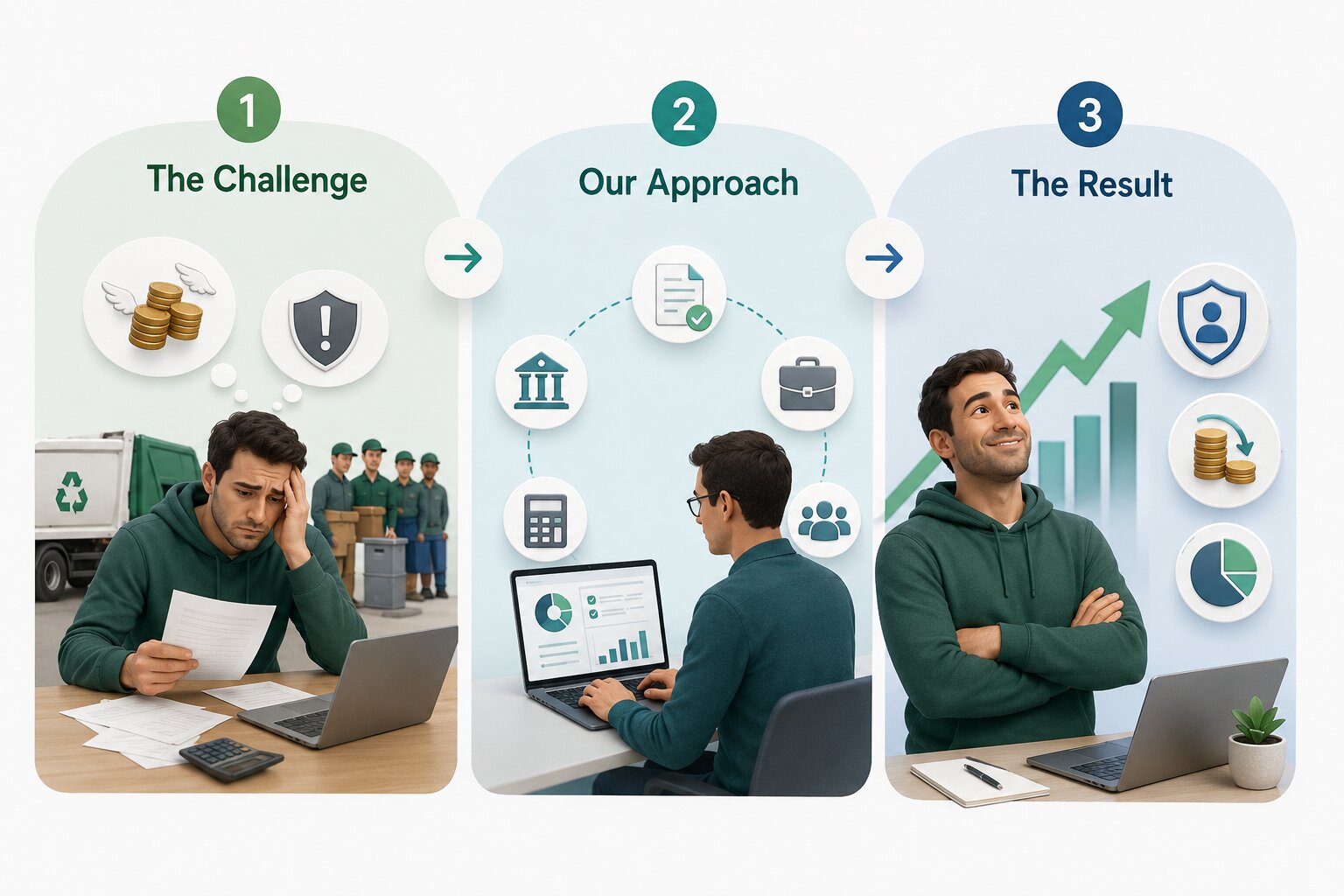
The Challenge
One of our clients ran a waste management and removals business; they covered everything from house clearances and storage to soft strip-outs. They had built up a genuinely established operation, with turnover approaching a quarter of a million pounds, around 6 staff, and a handful of regular subcontractors working alongside him. He had been working as a sole trader the whole time, and while the business had grown well, his structure hadn’t kept pace with it. On roughly £90,000 of annual profit, he was paying somewhere in the region of £30,000 a year in Income Tax and Class 4 National Insurance combined, which is close to a third of everything the business made. He had no strategy on how he drew money out, and no protection if something went wrong. With 6 staff and subcontractors relying on him and contracts of real size, the risk of trading in his own name was starting to feel like a liability, instead of a technicality.
Our Approach
We started with a full review of his income, expenses and how the business was actually being run day-to-day, alongside a side-by-side comparison of his tax position as a sole trader versus what it would look like under a limited company.
Once the numbers made a clear case for switching, our specialist accountants walked him through what incorporating would mean in practice. We handled the company formation itself: choosing a compliant company name, registering with Companies House, setting up his registered office and registering for corporation tax. We also rebuilt his bookkeeping on QuickBooks to properly reflect a business with staff and subcontractors and put a payroll and CIS process in place.
The Result
The switch was completed within a few weeks from his first conversation with the fynax team to fully trading as a limited company. Within his first year of trading as a limited company, he reduced his overall tax and National Insurance liability by roughly £8,000-£9,000 compared to what he’d have paid as a sole trader on the same profit, simply by taking income more efficiently through a salary and dividends structure. More importantly, he now had the personal liability protection a business of his size actually needed, and a clearer financial visibility across his different service lines.
Our client was very pleased as they had built up a proper business and Fynax team helped them make the switch very simple. (Noor Ahmed, Fynax CEO)
4. Administrative Responsibilities
What Legal Responsibilities Do Company Directors Have?
Becoming a director isn’t just a title change. Under the Companies Act, directors have legal duties, including acting in the company’s best interests, avoiding conflicts of interest and making sure the company meets its filing obligations. These duties apply personally to you as a director, separate from the company itself, so it is worth understanding them rather than treating incorporation as a formality,
What Filing and Disclosure Obligations Does a Limited Company Have?
Each year, a limited company needs to file statutory annual accounts and a confirmation statement with Companies House, along with corporation tax returns with HMRC. If you’re running payroll, there are additional PAYE reporting obligations too. We manage these as part of our payroll service, keeping you fully compliant. This is simply the trade-off for the tax efficiency and liability protection that incorporating gives you, and it is exactly the kind of ongoing compliance we take off your hands.
5. Asset and Contact Transfer
How Do You Value Assets Before Transferring Them to a Limited Company?
If you’re bringing existing business assets, equipment, vehicles or similar into your new limited company, they generally need to be transferred at a fair market value. Getting this valuation right matters for both the company’s accounts and any tax implications of the transfer, so it’s worth having it properly assessed rather than estimated. Our experienced accountants are here to help you through this process.
What Contracts and Insurance Need to be Updated When You Incorporate?
Incorporating means your business is legally a different entity than it was before. Contracts, agreements and insurance policies that were in your personal name need to be reviewed and likely reissued in the company’s name. That includes client contracts, supplier agreements and any finance or lease agreements. Leaving it unresolved can leave gaps in your cover or create confusion with who is contracted with whom.
Thinking of Making the Switch from Sole Trader to Limited Company?
If any of this sounds like where your business is right now, it’s worth having a proper conversation about whether moving from sole trader to limited company makes sense for you. With over 20 years of experience and having helped more than 900 businesses through this process, Fynax accountants can walk you through exactly what switching would look like for you. Get in touch for a free consultation.